Showing posts with label Wildlife. Show all posts

Saturday, July 25, 2026

Insurers to sell new Wildlife Risk Insurance from Friday

Kathmandu, July 15

Nepali insurance industry is selling Wildlife Risk Insurance Policy from July 17, first day of the new Fiscal Year 2026/27.

The Nepal Insurance Authority (NIA) informed on Wednesday that it has approved a Wildlife Risk Insurance Policy following repeated requests from provincial governments, local governments, the Department of National Parks and Wildlife Conservation (DNPWC), representatives of buffer zone user committees and forest user groups, wildlife experts, and residents of wildlife-affected areas to establish insurance coverage against losses caused by wild animals.

"Integrating wildlife-related risks into the insurance system will provide a more effective mechanism for managing such risks," the NIA said in a statement.

Non-life insurance companies and micro non-life insurance companies licensed by the NIA will be authorised to issue the newly announced policy which will be bought at Rs. 1,500. This policy is said to cover personal accident or death with maximum Rs. 1 million, and permanent and temporary disability with maximum Rs. 1 million and Rs. 500,000, respectively.

Likewise, maximum sum insured includes up to Rs. 100,000 for medical treatment of serious injury, and up to Rs. 20,000 for minor injury.

Other coverages include up to Rs. 500,000 for house and physical structures, Rs. 100,000 for livestock, and up to Rs. 50,000 agricultural crops.

Currently, the government compensates the wild-life related damages. It distributes more than Rs. 150 million in relief payments every year to compensate people affected by wildlife-related damage in buffer zones of national parks and reserves as well as in other affected areas. According to the DNPWC, the damage includes loss of human life, injury, destruction of physical property, agricultural crops, and livestock.

Over the past five years, the government has provided about Rs. 780 million in relief payments to victims of wildlife-related incidents.

The new policy will have one year's coverage period and cover risks arising from attacks by 18 species of animals – elephant, one-horned rhino, tiger, bear, leopard, jackal, deer, wolf, wild dog, wild boar, arna (wild water buffalo), crocodile, gaur (Indian bison), python, nilgai (blue bull), monkey, porcupine and blackbuck.

According to the NIA, the coverage for livestock will be limited to animals reared for agricultural purposes, and agricultural crops cultivated by the insured during the policy period will be covered up to the insured amount.

In case of any addition, disposal or transfer of ownership of an insured house, physical structure or livestock, the insured can notify the insurer, and the insurer will transfer the policy to the new owner free of charge.

"The policy will cover damage caused by wildlife attacks to residential houses, whether constructed of concrete, mud, thatch, tin or earth, as well as related structures within the residential premises, including cattle sheds, kitchens, toilets and boundary walls, up to the maximum insured amount," read the statement.

However, the insured must preserve evidence of the loss and may remove damaged property from the site only after the preparation of an official assessment report.

In case of a death of the insured or a member of the insured's family due to a wildlife-related accident, the insurer must pay Rs. 50,000 within seven days of the incident towards funeral and last rites expenses, subject to the policy limit, informed the NIA.

But the insurer will deduct 5 per cent from all other claim payments before settlement other than for claims relating to human death.

The NIA directed the insurers that upon receiving information or notification of a claim, they must initiate the claims process immediately. 

Published in The Rising Nepal daily on 16 July 2026.         

Thursday, May 22, 2025

We must conserve forests: PM Oli

Kathmandu, May 10

Prime Minister KP Sharma Oli has said that the indiscriminate felling of Saal trees in the name of scientific forest management will be strictly stopped.

Inaugurating the Second National Forest Promotion Workshop organised by the Ministry of Forests and Environment on Saturday, he said that Nepal's Saal forests are an exceptional example of nature and that such tall trees are important for water retention, so they should not be commercially utilised before reaching maturity.

“Though the slogan ‘Green forest is Nepal’s wealth’ is an old one, forests had not been properly utilised as a resource. However, we have now made a firm commitment to prevent the destruction of forests and to contribute to the solar system’s balance by conserving and properly utilising the forests,” said Prime Minister Oli.

According to him, Nepal has increased efforts in forest conservation. Now, instead of merely expanding forest areas, it needs to move towards productivity. “For the commercial utilisation of forests, we must adopt a policy that avoids both haste and delay,” he said.

Currently, forests make up 46 per cent of Nepal’s land area.

Noting that Nepal is a country rich in nature and vitality, PM Oli highlighted that this also contributes to global environmental efforts. He emphasised the need to strengthen forests and convert bushlands into dense forests.

He further said that agriculture and forestry officials could collaborate to promote fruit cultivation and that olive farming could be expanded in the Himalayan region. He urged against regionalism, encouraging cooperation among all regions.

Stressing that encouraging farmers towards livestock farming would support renewable forestry, PM Oli added that expanding pastureland would help integrate forest and agricultural ecosystems.

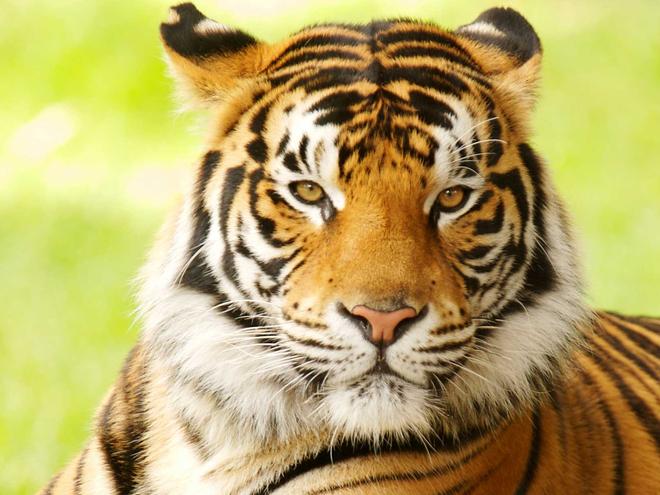
“I was criticised as being anti-environment when I said we don’t need to further increase the number of tigers. But people misunderstood. A tiger doesn’t read law books when it gets hungry and can’t find food; it attacks people. Just because a tiger in a photo looks harmless doesn’t mean it won’t cause harm,” said Prime Minister Oli.

Nepal has more than doubled its tiger population in line with international commitments. Those living near forests understand the difficulties involved. “Environmental conservation is meant for the welfare of humanity. If humanity itself is unsafe, environmental protection becomes meaningless,” he said.

He also pointed out that some countries still refuse to honour the Paris Agreement and stressed the need for global cooperation in this regard. 

Published in The Rising Nepal daily on 11 May 2025. 

Tuesday, February 1, 2022

Contractor not guilty on rhino’s death: FCAN

Kathmandu, Jan. 30

The Federation of Contractors Associations of Nepal (FCAN) has demanded to stop the activities to demoralise the construction entrepreneurs in any form.

Expressing concerns about the legal process against the contractor of the road expansion project along the East-West Highway in Bharatpur Metropolitan City where a rhino succumbed to death after falling into an under-construction pit, the FCAN said that the punitive activities against the entrepreneur were illegal.

“It is illegal to drag a contractor into the controversy and initiate legal process to punish him for the act which he did not commit,” it said in a statement.

Following media reports about the death of the rhino on January 23, local police in Chitwan filed a case against Sahadev Khadka, representative of the construction company, Indo-Sagun JV.

“He is falsely accused in the name of investigation. So it must be immediately stopped,” said FCAN.

It claimed that the company had applied all safety measures necessary for the construction.

The FCAN’s General Secretary, Roshan Dahal said that the federation had concluded that the plot against the entrepreneurs would hit their morale hard and discourage them from conducting their business in a better way.

According to him, the pit was required to keep open for some days to let it set.

The FCAN also said that it was saddened at the death of the endangered animal and demanded formation of an independent investigation committee including the representatives from FCAN and Ministry of Physical Infrastructure and Transport.

Published in The Rising Nepal daily on 31 January 2022. 

Tuesday, October 22, 2019

Student makes siren drone to chase away tuskers


Jhapa, Oct. 19

A student in Jhapa district has developed a siren drone that chases elephants away. 


Anil Pradhan, a grade 12 student, of Bhadrapur Municipality -1 had built the drone at his home and successfully tested it in chasing elephants. 


"Wild elephants always troubled the villagers in my locality. People were scared of the elephants as many members of the society were killed by the animals in the past," he said. "The events motivated me to study the situation and develop a solution to the trouble."


When Anil found that the elephants were most scared of the bee humming, he installed the sound in the drone. It also features a red light as well. 


According to him, when the drone went near the elephants with the sound of a humming of bees, elephants ran to the jungles making loud and frightened sound. 


As the remote of the drone works as far as five kilometres, the users of the machine can operate it safely from a sizable distance so that the wild animals do not harm them. 


Chief of the Division Forest Office in Jhapa Bishnu Lal Ghimire said that the drone was successfully tested in chasing the wild elephants. "The machine has proved itself as the most effective method in chasing away the elephants without huge cost and damage."


Anil has tested his innovation in presence of the officers of the DFO and local people on Thursday and Friday where the drone chased away seven elephants from Duwagadhi of Mechi Municipality on Thursday night and five elephants from Jalthal of Bhadrapur Municipality on Friday night.


Anil has developed an interest in computer and electronics which was his childhood hoppy as well.

Bhadrapur Municipality has recognized Anil's talent and provided him economic support. The drone carries the name 'Bhadrapur Municipality Siren Drone'. 


The drone was prepared at cost of about Rs. 250,000. 


Jhapa in the eastern Nepal is the district most affected by wild elephants. Although multiple programmes were implemented to reduce the damage, they failed to deliver satisfactory results. 


About 152 km area – from south-east Kachankawal Rural Municipality to east-north Mechi Municipality's Bahundangi – is announced as the Elephant Corridor. About 43 km has been protected with fencing while work is going on at other area. 


Wild elephants have so far killed 39 people in the district.

Published in The Rising Nepal daily on 20 October 2019 (Originally written by Tikaram Upreti). 

Monday, January 30, 2017

Learning to eat!

A baby elephant learns to chew shoot in Chitwan. LuckyKally gave birth to
the baby a couple of months ago at Temple Tiger Green Resort. 

Thursday, December 15, 2016

Baby elephant at Temple Tiger

Kathmandu, Dec. 11
LuckyKally, an Asiatic elephant at the Temple Tiger Green Jungle Resort in Chitwan, Friday gave birth to a male calf.
According to the Resort, the calf was conceived by a wild bull elephant when LuckyKally was on her regular patrol.
 "The birth is very important as the species of Asiatic Elephant (Elephas Maximus Indicus) is currently listed as 'endangered' on the International Union for Conservation of Nature (IUCN) list of endangered species as the population the animal has declined by at least 50 per cent over the last 60 to 75 years or three generations," read a press statement issued by the Resort.
Currently, the Asian elephants are primarily threatened by degradation, fragmentation and loss of habitat, and poaching.
The Resort said that this was the fifth baby being born at the Temple Tiger.
Asian elephants are well known for their immense strength and friendliness towards humans.

Wednesday, May 18, 2016

NTNC and ZSL for tiger conservation

Kathmandu, May 18: The National Trust for Nature Conservation (NTNC) and Zoological Society of London (ZSL) Tuesday signed an agreement for integrated tiger conservation.
NTNC member secretary Govinda Gajurel and ZSL representative for Nepal signed the agreement on behalf of their respective organizations.
The project will be implemented at Parsa and Shuklaphanta Wildlife Reserves, Banke and Bardiya National Parks, and their buffer zones with financial assistance from the International Union for Nature Conservation (IUCN) and German Development Bank (KFW).
The project aims at doubling the number of tigers in Nepal by 2022.
“The project includes management of reserves and national parks and capacity building, management of tiger’s habitat, strengthening of the organizations involved in poaching control and livelihood improvement programmes for the residence of the buffer zones,” read a press statement issued by the NTNC.
The number of tigers in Nepal increased to 198 in 2013 from 125 four years earlier. 

Featured Story

Govt prepares primary draft of DRR Policy

Kathmandu, Apr. 29: The government has prepared the preliminary report of the National Disaster Risk Reduction (DRR) Policy and Strategic ...